Monday, April 2, 2012

A dry spell in San Pedro de Atacama


When I was looking at the map of Northern Chile the Atacama desert clearly sticks out - that's where I wanted to go! But getting there was no small task...

So how to cross the border between Peru and Chile? They’re not making it easy for the travelers; this was perhaps the first border crossing where there wasn’t a direct a bus that would take you from one country to the other. Nope. First you have to get a bus to the southernmost town in Peru (Tacna). I got a ticket to the 7am bus from Arequipa to Tacna, arriving at around 1.30pm to Tacna, with a nice Cruz del Sur bus. Ah, they have one of the best buses in South America that I’ve come across (and the price isn’t bad, 30 soles i.e. around 10€ for a 6-7 hour bus ride). I met Lauren, who I had already met the day before on the Colca Canyon trek, at the bus station and she was taking the same bus. We joined forces with an Argentinian and a Chilean guy to cross the border. To get to Chile you have to take a collectivo from Tacna to Arica. We didn’t have to wait as our group filled a car so after a bit over an hour, including the stop in the Peruvian and Chilean border offices we were in Arica, we were in Chile! I even managed to smuggle a banana through the strict Chilean customs, haha (by mistake)!

Once we drove across the border I got to see the Pacific for the first time from this side of the ocean! And it was nice to be back in the warm climate! So it was about 5pm when we were in the Arica bus terminal (having lost 2 hours on the time change, crossing to Chile) and the first bus that would go to San Pedro de Atacama left at 9.30pm. By the time I was holding my bus ticket I realised I forgot my shoes in the collectivo… whopsee! That was the first thing I have left behind on my trip… and maybe it was meant to happen, I was sick and tired of those shoes.

We had around four hours to wait for the bus so it was a good time to have lunch, check emails and get a glass of wine. Anyway waiting for the bus wasn’t all that bad since I had Lauren and Cristobal, the Argentinian guy, to accompany me. Cristobal also joined me on the night bus to San Pedro which we boarded at 9.30pm. We had to give our passports to the driver’s assistant and after 11pm there was a passport check – strangly already two hours after we had left the border (and had our passports checked & stamped). But that wasn’t enough, at 3.30am somewhere in the middle of nowhere there was another customs point. Everybody had to get out of the bus with all their luggage and wait outside while the officers checked everybody’s bags… So much for getting sleep on the bus. Then, of course, a bit after 7am we arrived to Calama, already close to San Pedro, for an unscheduled bus change. At 8am we were back on the road to San Pedro where we arrived after 9am. I was thoroughly annoyed and tired – 24 hours of traveling from Arequipa to San Pedro (1050 km, by the way).

Luckily I met a girl on the bus ride to San Pedro, Valerie, who was also staying in town. We joined a French couple and walked to a local hostel. San Pedro is very rustic and our hostel fit that bill – but I couldn’t have cared less as long as I had a somewhere to dump my bags and get some rest. 


Saturday, March 31, 2012

The Canyon Country - Arequipa and Colca

After the obligatory (and rightfully so) visit to Cusco and Machu Picchu I was ready to start moving south, to Arequipa. This white city of southern Perú is still in the mountain region, beautifully set next to the volcano Misti. You can feel more of the small city vibe even though you have all the services, lots of restaurants, big plazas with palm trees and another massive cathedral. I got a bit of a shopping bug and found some funny small souvenirs to my friends and actually lots of lambada style dance outfits for the coming dance parties. The shopping malls are not as glitzy as in Argentina or Brazil but you can find everything there. One thing in particular I found surprising were the tens of shops selling wedding dresses, they're everywhere!


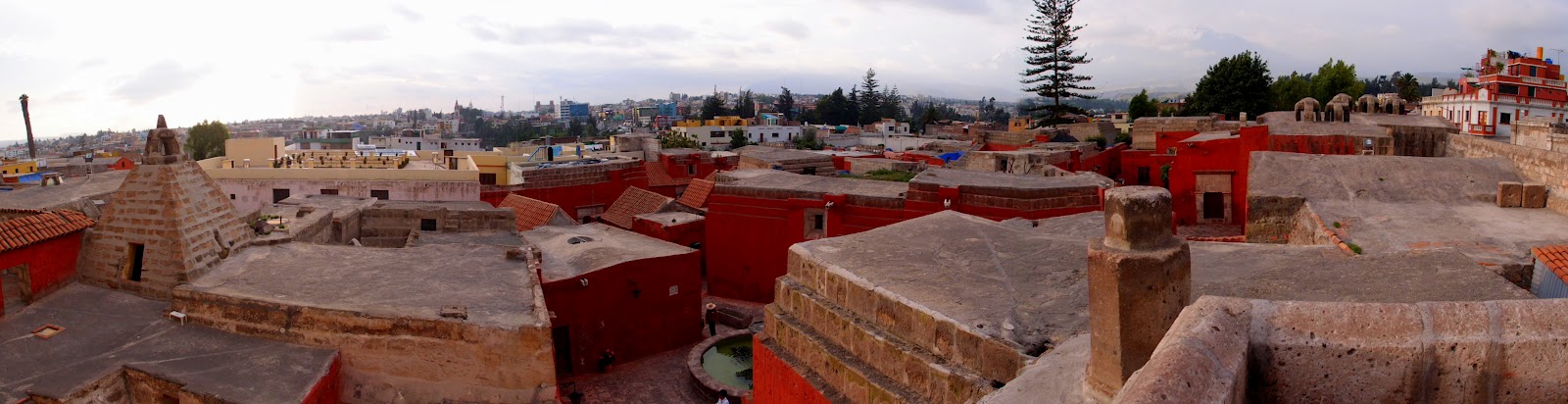
One of the top things to do in Arequipa is to visit the Monastery of Santa Catalina (entrance: 35 soles). It’s not just a monastery but more like a miniature city with streets, houses, water distribution systems… The maze of buildings spreads over a couple blocks (20.000m2), conveniently almost in the center of Arequipa. In its heyday the monastery housed 800 people (around a third of them nuns). Several of the nuns’ houses were open to visits, still fully furnished and preserved with explanations in four languages – a very nice place to spend an hour or two. The monastery is also open during the evening on Tuesdays and Thursdays for candlelit tours!


Wednesday, March 28, 2012

Revising my bucket list: Machu Picchu - check!


"Insert legendary words about this 'Lost city of Incas'...." Nah, despite the fact that no one seems to know what the place was really about, Machu Picchu is one of those places that needs no introduction. It's one of South American most famous sights and #1 image & place to visit listed in my bible, “The Lonely Planet South America on a shoestring”

I came a couple days before my trip to Machu Picchu to Cusco (like most of us who go there) to rest, regroup and make sure all is taken care of. I already had my train ticket to Aguas Calientes and bought the entrance to the Machu Picchu Sanctuary in Cusco so I was ready to go. My train was Perurail's Vistadome (and on the way back the Expedition) - Perurail is one of the top class rail companies in South America. You can already tell by their website and their sleek office at the Cusco's main square (Plaza de las Armas) confirms the image I had. The Wanchaq train station also stands apart from the typical stations I’ve seen on my trip: extremely neatly dressed staffed hovering all around a handful of passangers in the groomed station grounds. Well what do you expect if you pay (at minimum) 56 USD and up for a four hour train ride? Their luxury Hiram Bingham train costs 299,50 USD!! In comparison, a 10 hour bus ride can cost less than 10 USD – and I just booked a cama (sleeper bus with wide reclining seats and meals included) bus ticket from Cusco to Arequipa: it takes about 10-11hours and cost me 50 soles (under 20 USD).

I didn’t really fancy waking up at 4am so I took the later 8.05am train. Now it was the “rainy season” so the train would actually leave from Ollantaytambo (about halfway between Cusco and Aguas Calientes  the Machu Picchu Pueblo) and a Perurail’s bus would takes us there from Cusco. My plan was just to arrive to Aguas Calientes, take it easy for the rest of the day and go up to Machu Picchu early next morning. No need to try to rush up on the same day.

The bus ride was a bit bumpy but there was plenty of space on the small buss. And the views along the way were worth to stay awake (even though I was typing blog posts on my notebook at the same time): fields of all colors with tiny piglets and lambs running around, misty dark green hills behind them... It was less than two hours to Ollantaytambo and from there we boarded the train which slooooowly started to roll the last miles to Aguas Calientes. I was sitting next to Rafael from Lima, it was nice to have a Peruvian person to ask all the stupid questions about Perú and Machu Picchu!


Cusco - the portal to Inca Perú

After lovely four days at the Titicaca lake I got on the morning bus from Copacabana (Bolivia) to Cusco (Perú), on my way to Machu Picchu. I had read about all the various complications travelers had had on this particular journey (extra bus changes, unsafe buses etc) so I was praying for the best. It seemed there wasn’t too much choice and it was hard to find reliable information about the trip so I just bought a ticket to the 9am bus – after asking in three different ways about how many times I need to change the bus (to which I was told just once, in Puno). I found out my travel friend Christine was going to be on the same bus, it was fun to meet here since we parted ways at the Iguazu falls!

We left at 9am from Copacabana and just about half an hour later we were already at the Bolivian/Peruvian border. We got back to the bus after the standard (but fast) border formalities and continued on. Suddenly we were making an extra change in a town called Jumica and got told we’d have to wait a half an hour for the bus to Puno. The locals were laughing about the half an hour wait and in fact it turned out to be close to two hours before our bus arrived: Us and what felt like 100 Bolivians or Peruvians with a truckload of luggage (each) crammed on the same bus, pushing and shoving the tiny bus corridor. Then another change in Puno and I was exhausted… at least there we didn’t have to wait for long but it also meant we had pretty much no time to get anything to eat. Also the ATMs didn’t work in the Puno station so I went to change my remaining bolivianos in the currency exchange / pharmacy so I could pay the departure tax (which seems to be the norm in all the Peruvian bus stations: 1-2 soles).

Tired, hungry and annoyed by all the extra stops we were finally in the bus that would take us to Cusco. What saved me from total desperation was the good company: Christine and also a group of Argentinians who were helpful in understanding what was going during the trip. Finally, after the very shabby looking border regions and Puno, the views started to get spectacular about three-four hours after Puno. The road goes between velvety green hills and farms on the left and snow topped mountains on the right. So finally I was in the beautiful Perú! After having left at 9am we arrived at around 8.30pm local time to Cusco. The lights / the power was out and frankly it looked like we are arriving to an abandoned city… But when we got off the bus the city was back alive, in lights. I was happy to get to my nice hostel, take a hot shower and go to bed. I even had wifi in my room so I could chat with my friends, just lying under my blanket :)

The next morning the first thing on my agenda was to make sure I had a ticket to Machu Picchu. I actually thought I had bought a ticket online but when I checked to make sure that morning it turned out the payment hadn’t gone through and I had none!! So it was off to find the ticket office (Ministry of Culture, INIC) in Cusco and hope for the best! I had booked my train tickets so that I had two and a half days at Aguas Calientes (Machu Picchu Pueblo, just a short bus ride from the site) but I was hoping to get a ticket for one specific day. It took a little bit of looking around to find the office but I was there around 10am and lined up. And yes: I got one of the last nine tickets! That was pretty close.... Well, there were still a couple other options but I happy I got just the ticket I was looking for!

I had two days to wander in Cusco before the Machu Picchu trip so enough time to look around the main sights, do some shopping and also have lunch & dinner with Christine before she left on a trek. Cusco is beautiful both day and night – I heard the nightlife is pretty good but I was so tired both nights I was just happy to get to bed after dinner. But during the day I covered most of the downtown – lots of impressive churches, pristine plazas, wide avenues, souvenir & clothes shops of all types (and for all wallets).

Plaza de las Armas (like all the main squares seem to be called)

Monday, March 26, 2012

Copacabana and Isla del Sol – the marvels of Lake Titicaca

Titicaca Lake ended up on my travel list basically because it was conveniently located between Bolivia and Peru and it sounded interesting as it’s the highest commercially navigable lake in the world, at 3800m in altitude. And because it sounded funny! I was a bit weak after being one day sick in La Paz so when I arrived to Copacabana that afternoon I just checked into my luxury hostel (Hostal las Olas – highly recommended!) and made a camp in my bed. And it was a superb hostel indeed, with a view of the lake even from the bed :) I had a big room (for five people actually) just for myself, a stylish kitchen with tabletops made of huge slabs of rock and two wooden sinks in the kitchenette, a stone lined shower in the bathroom, a fireplace in the room…. In the terrace I had a stone table and hammocks where you could chill and look at the Titicaca lake. Nice place just to hang out.

The view from my window & terrace - perhaps the best in Copacabana!

Monday, March 19, 2012

Sick and tired in La Paz

It was quite the shock to arrive in the cold, dark and rainy Bolivia after three hot weeks in Brazil. Yes, I knew it would be cold but it always amazes me how in these cold Latin American places it’s also cold inside the houses (coming from a cold country where it’s warm inside the houses, not cold). And in La Paz – at the altitude of around 3600m above sea level – it was cold inside, outside… Only during the days when there were those nice moments that the sun came out it was actually enjoyable to be outside (and it was still cold inside). Luckily there were those moments too.

The first morning when I woke up it was raining in La Paz so I just went to have breakfast and climbed back to bed. At around lunchtime I finally stepped out of my hostel to see this high altitude city. I wondered up and down the small streets in the center of La Paz… There were lots of streets that were so steep that there were actual steps, not a flat pavement. The center is full of shops, cafes and restaurants, tour agencies and exchange offices. Mostly you’ll see small arts & crafts stalls selling alpaca sweaters, scarfs, hats, mittens, shawls, socks and legwarmers; leather and canvas bags; jewelry of all sorts; all kinds of textiles and paintings. Everything looks cute, warm, soft and most of all colorful. And best of all: cheap. Like for everything there (food, accommodation, transport…), you’re paying just a fraction of the prices in Argentina, Brazil and Chile. So if you want to (or can – I can’t fit anything more in my bags) buy some souvenirs, this is the country to do it! Mexico was the same. It kills the shopaholic-me to pass by all those shops and not to buy a ton of things. If I could only buy a containerful of stuff and ship it home...


The steep hills of La Paz, rising up to around 4km in altitude

Saturday, March 17, 2012

Week in the life of a zouk dancer in São Paulo (- and it isn’t a bad life!)

After the Floripa carnival and a couple days relaxing on the beach at Ilha do Mel I was ready to enter one of the biggest cities in South America, São Paulo. A massive city - by population (about 19 million) and by physical size, the metropolis spreads out tens of kilometers in each direction, melting into smaller cities of southern Brazil. It is actually the largest city in the southern hemisphere! I was already a bit hesitant just thinking about the place due to the sheer size of São Paulo and all the dangers & annoyances that come along with it but knew I had so much to look forward to: meeting some friends I met earlier in Rio and especially getting back to my normal (dream) life – dancing zouk!

São Paulo from air (pic I took leaving the city)
My trip from Ilha do Mel to Sampa (as some affectionately call the city) didn’t go as smoothly as I had hoped. Apparently it was the end of summer time that late February Sunday morning and I had woken up one hour too early – very confused at first about this but just happy I didn’t get up one hour too late… I had a big breakfast and got on a boat to Pontal do Sul. There I was hoping to catch one of the surely full buses to Curitiba where I could catch another bus to São Paulo. But indeed the buses were full so a Spanish lady and I shared a taxi from the port to the bus terminal where we first took a local bus to Paranaguá, from there a bus to Curitiba and from there a bus to São Paulo. I didn’t have to wait for too long in any of the points but it all accumulated (plus the last bus being stuck in traffic) so, having left the island before 9am in the morning, at 10.30pm I arrived to (500 km away) São Paulo. From there it was only a 20 min cab ride though the stormy city to my friend’s place where I was warmly welcomed by three guys – this would be my home for the next week! 

Thursday, March 15, 2012

Ilha do Mel – sweet beaches in Southern Brazil

I had planned on having some chill out days after carnaval in Floripa and before my zouk marathon that awaited me in São Paulo the following week. And obviously since I was on the Brazilian coastline I looked up where are the nicest beaches between the two places. The answer was pretty clear: the island of Ilha do Mel, “the island of honey”.


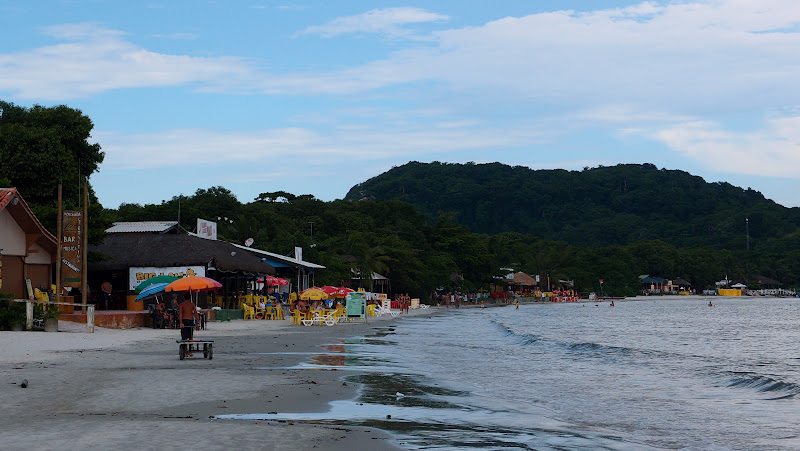
There’s two main villages where you can stay on Ilha do Mel: Encantadas and Brasilia. I chose the Encantadas and it turned out to be a safe bet: about a 100-200m stretch of sand, lined with restaurants, hostels, pousadas and camping sites – and even one mercado. Our hostel – like all of them – had a lovely porch straight on the beach and a huge breakfast. On the Brasilia village the hostels were in the woods, off from the beaches. You quickly notice why there are no cars on the island: there are no roads, just some trails that connect the different villages and beaches.

Encantadas

Tuesday, March 6, 2012

My Brazilian samba parade!

Brazil... Carnaval... I certainly wasn't going to miss a samba parade at the local Florianópolis sambódromo! The main parade on Saturday was sold out by the time I got there on Friday so I got a ticket to the next best thing, the final parade - the champions’ parade held the following Tueday.

And I made sure I was there early. The parades are at the Floripa samba street, sambódromo (yes, they have one too, like in Rio). It’s like a sports stadium but with one straight white concrete alley going through it. It's a funny concept to have a stadium for basically a couple events per year (or do they actually use it for something else too?) but in the Brazilian mindset it might be just the thing.

When I came there at around 7 pm there was just a handful of people in the audience and even when the first parade groups started at around 8pm it was mostly empty. But I was having too much fun cheering to the dancers and taking pictures of all the fabulous costumes and floats! I didn’t even notice that the whole area filled up to the brim by midnight! And I didn’t have to be there for long until I attracted new friends, a huge group of Israelis adopted me. I really didn’t follow what the program was since all the announcements were in Portuguese – but who cares as long as the cheering dancers kept rolling pass me.

The most impressive things in the parade? There were lots of them: the young dancers really knew the samba moves, even the kids. The passistas (solo dancers) obviously had worked on their samba no pé since they were kids and it was fun to watch them when they really kicked in the high gear. The mestre salas (the male dancer in the flag duo) were spinning like crazy! And I loved how smoothly the male solo dancers do the samba no pé. There were lots of groups with precise choreographies, really long ones… I paid attention to a couple of the groups and felt that I didn’t even see them repeat the sequence in the entire time they passed me (which usually would take longer than one run of their enredo). The baterias (the bands) were massive and I think they were the groups that really got the crowd going.


Wednesday, February 29, 2012

Carnaval in Floripa! Drag queens, caipirinhas, samba and white beaches…

Three flights. Three effing flights. Never again will I book a trip to somewhere with two stopovers. This time even the second flight left an hour late so made second change was a bit more “exciting”. But these are the things a girl needs to do to get to a nice carnival! So I flew from Argentina to Brazil, from Salta to Florianópolis (=Floripa), on the Thursday before the Carnaval. The Carnaval - a Catholic holiday - is a major event all over Brazil, in most places in South America as well as many places in the rest of the world as well. The Brazilian Carnaval though seems to have nothing to do with anything that resembles a religious holiday ;)

I had heard that Floripa is one of the nicest places to see the carnival in the southern Brazil. I manage to get the (idiotic) flight and a hostel there so I was all set! I was staying in the island in front of the city of Florianópolis, Ilha Santa Catarina, as most tourists do. The island is full of beaches and funky “towns” or neighbourhoods and there’s a lake as well. My spot was at the lake, Lagoa de Conceição. Lagoa is pretty much in the center of the island and there's plenty of shopping, restaurants, bars and hostels. Also kite surfing spots!


Saturday, February 25, 2012

Salta - and final words on Argentina

I guess I needed some rest after all the touring during my Argentina leg of the trip so I decided I wouldn’t do anything in Salta. And it worked out pretty well. I was responding to emails, making updates on my blog, arranging photos, booking a flight… ok so not totally relaxing. But it was nice to not have a set “day plan”, I just walked around in the city – and somehow always managed to do that during siesta. Salta really closes down  for siesta, unlike some of the more “touristy” towns along my road.

One of the prettiest parks I've seen, in the center of Salta

Friday, February 24, 2012

The many colors of Northern Argentina - Jujuy

One of the most interesting places on my trip was the Jujuy region in the Northern Argentina. I was recommended to go there by a Porteño friend of mine Maria so I had put it on my long list. Jujuy or more specifically San Salvador de Jujuy is 90km north of “the capital of the Northern Argentina” Salta and wanted to make a visit there before Salta. I left Mendoza Saturday at noon and arrived to Jujuy at 8 am the next morning. I woke up a bit before we arrived so I got to “enjoy” the breakfast they served in the bus (tea or coffee, alfajor-cookie, bisquits and jam) and enjoy the views as we passed between green fields, forest covered hills and mountains.

I was fairly tired and moreover tired of travelling, packing, unpacking, walking, carrying my backpack… So doing nothing special for one day sounded like a good idea. I was relaxing in the hostel, playing with the kittens that lived in hostel roof, walked a bit around the town. I had a super heavy steak dinner in a nice restaurant (and it was cheap there!) and was ready sleep quite soon after that.

Lots of beautiful churches... 
The empty streets of Jujuy on Sunday